Cosmo Tech

Greener supply chains with AI Simulation

A systematic approach to sustainable supply chain management

Environmental issues are complex and closely tied to supply chain management, creating challenges due to uncertainties about trade-offs and interdependent strategies needed to achieve economic, environmental, and social sustainability. Sustainability can no longer be treated as an isolated activity; it must be fully integrated into the formal supply chain management process. This requires managers to adopt a systematic approach encompassing the entire supply chain, from origin to consumption, including reverse logistics.

Balance inventory risk, customer satisfaction, and environmental impact

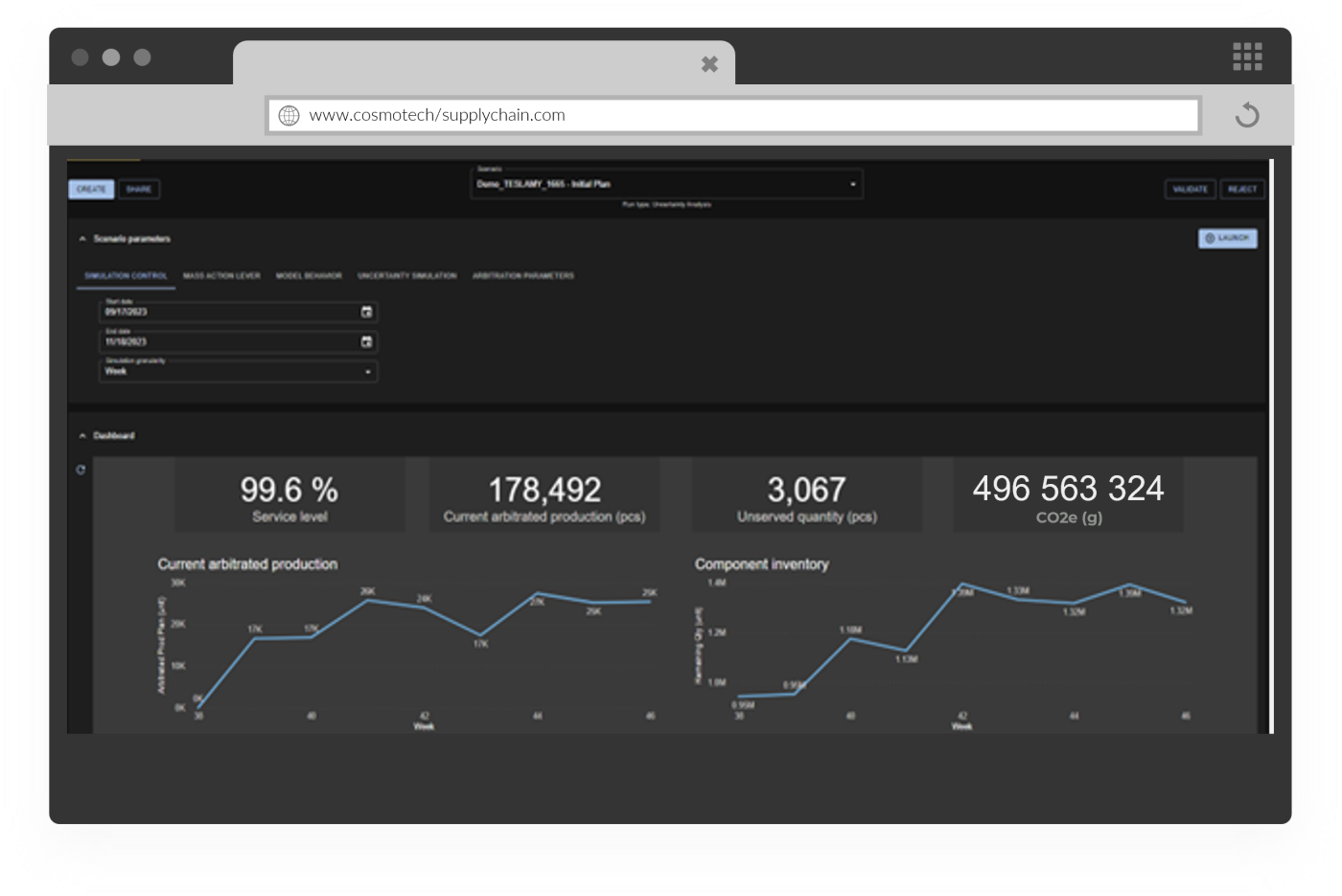
AI Simulation enables smarter decisions for sustainable supply chains by modeling material flows, costs, and environmental impacts.

  • Optimize ordering, stocking, distribution and service level to create responsive, sustainable inventory systems.
  • Minimize emissions by considering logistics, transport, and facility management.
  • Balance economies of scale with demand and supply uncertainties to achieve environmental and cost efficiency.
Enhance network design, advance sustainability

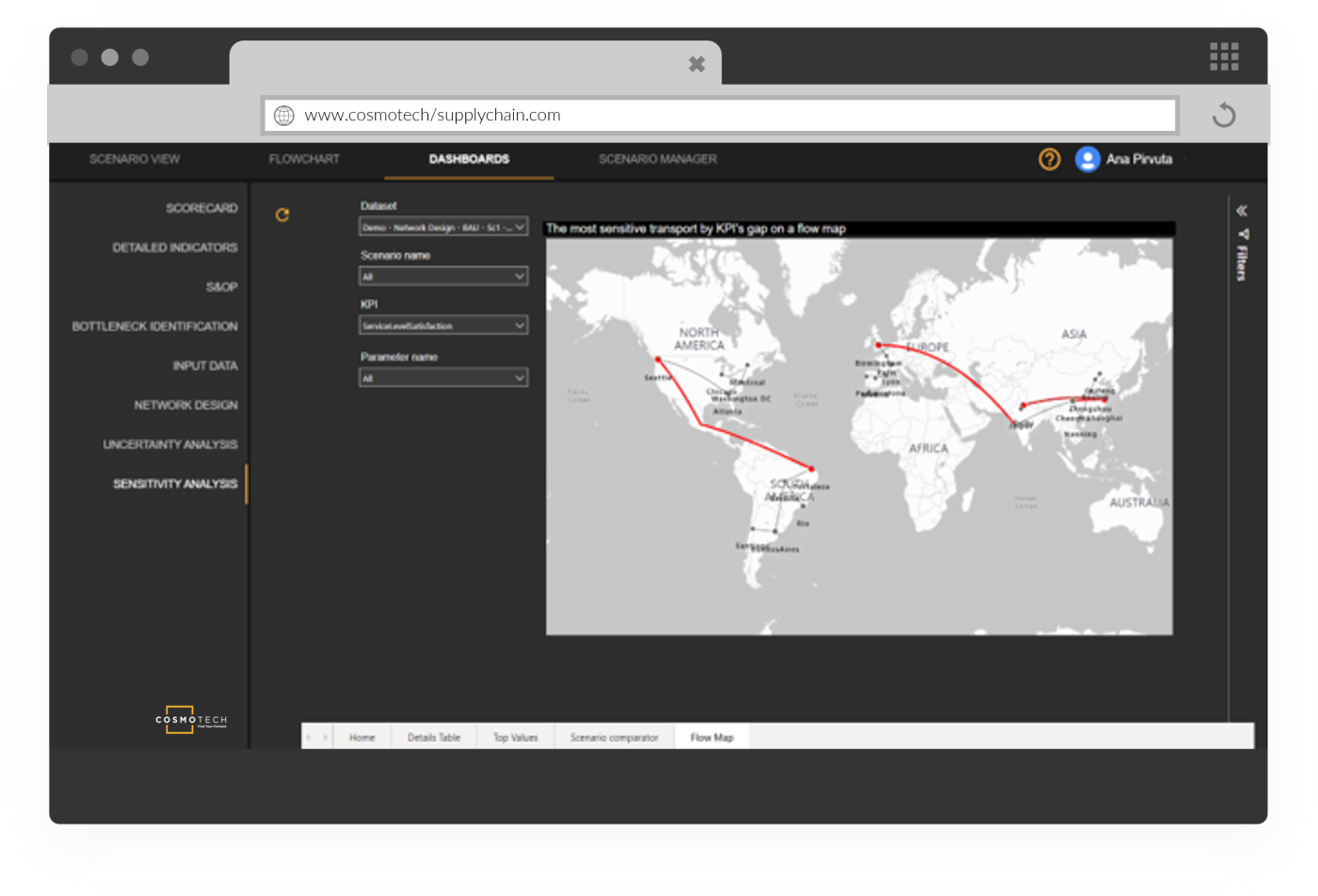
Strategically design and optimize logistics networks to implement greener practices and tackle major emission sources in transportation and operations.

  • Optimize logistics through strategic network design, reducing distances and shifting towards greener modes of transportation 
  • Leverage critical factors such as route optimization, equipment efficiency, and load planning to lower emissions, costs and drive operational performance. 
  • Use advanced metrics and insights for assessing GHG, optimizing logistics at every level of decision making.

Optimize warehousing, reduce carbon footprint

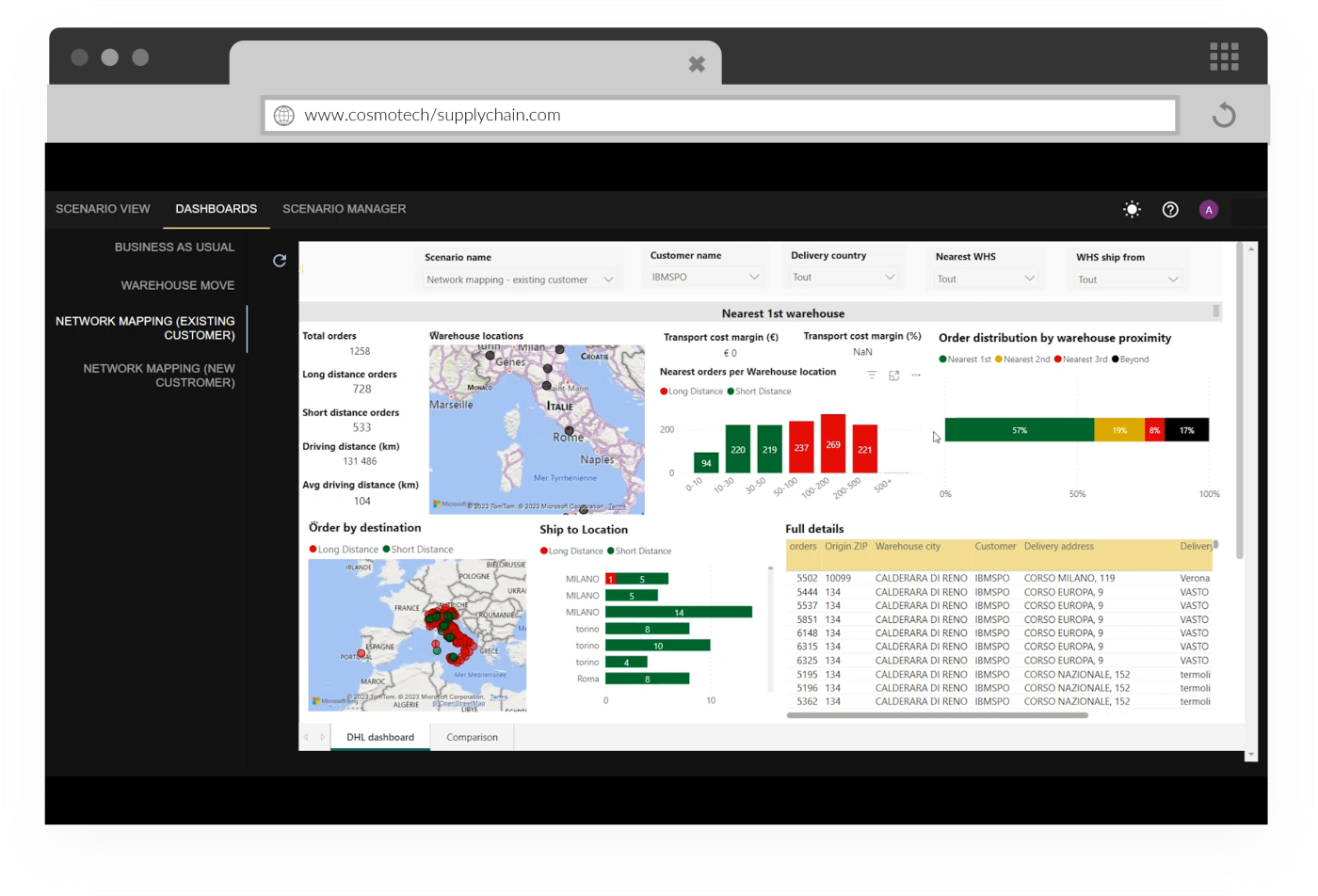
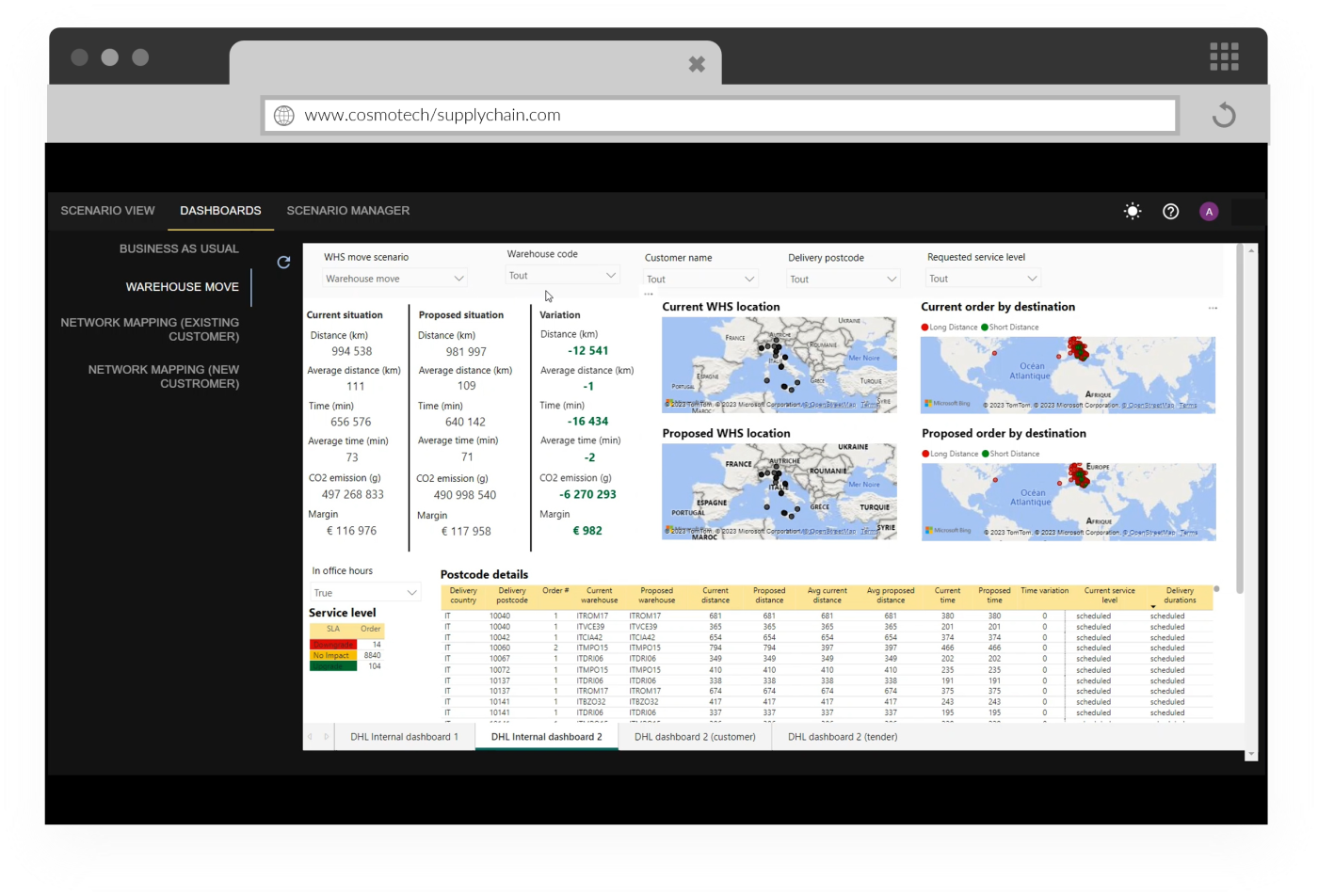
Cosmo Tech’s AI Simulation platform offers decision-makers precise recommendations for optimal warehouse network configurations. It helps organizations balance logistical efficiency, customer satisfaction, and environmental responsibility, reducing CO2 emissions and operational costs.

  • Incorporate transportation emissions, energy sources, and pollution metrics into facility location models to identify optimal, eco-friendly network configurations.
  • Evaluate warehouse strategies’ impact on costs, service levels, and delivery efficiency for both the network and specific customers.
  • Input different transport cost structures, customize the warehouse parameters or adjust the data related to the CO2 emissions, service level or customers.

Implement dynamic closed-loop system strategies

By leveraging AI Simulation to model complex relationships within closed-loop supply chains, our solution helps decision-makers manage remanufacturing and product lifecycle dynamics while addressing market uncertainties.

  • Gain clear insights into converting waste streams into potential reuse pathways while increasing profitability and maximizing product lifecycle control
  • Compare strategies for different product families and lifecycles, considering uncertainties in design, reverse logistics, and market demand 
  • Identify optimal reacquisition channels, remanufacturing processes, and reintegration strategies while reducing resource and operational inefficiencies.

Maximize sustainability and procurement strategies

By incorporating uncertainties in complex supplier dynamics, AI Simulation significantly enhances procurement strategies to align with ethical and environmental standards. 

  • Scan the entire supply chain to identify supplier risks and opportunities 
  • Assess the impact on environmental metrics and business objectives across the entire supply chain 
  • Automate thousands of simulations to optimize supplier selection, minimize carbon footprint, inefficiencies and risks of high costs with prescribed action plans.