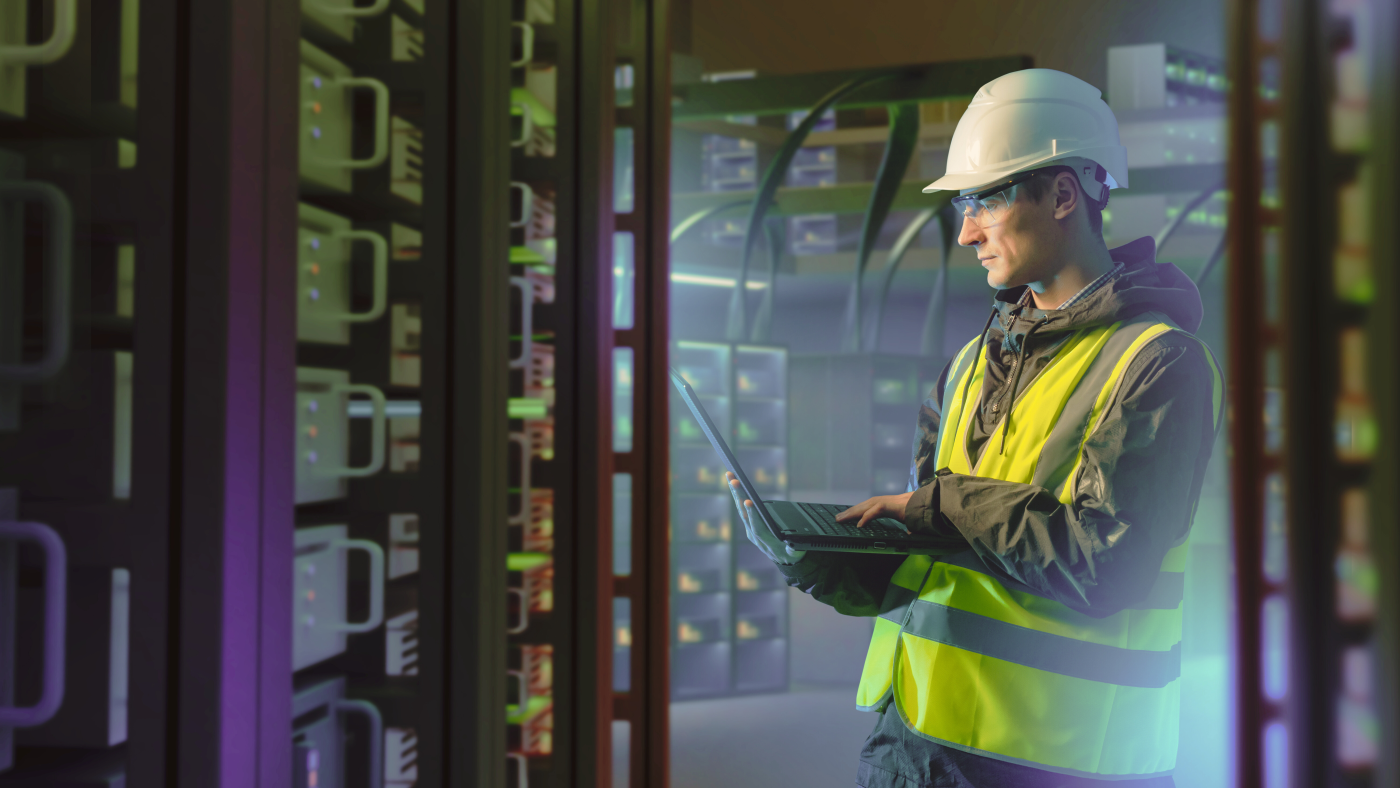
In today’s AI-driven economy, data centers have become the backbone of the digital world. Every second of uptime matters, and every second of downtime has a price: an average of $5,600 per minute, along with SLA penalties, reputational damage, and lost customers. As GPU clusters, large-scale AI training, and edge computing push infrastructure harder than ever before, operators face a challenge not unlike what utilities have grappled with for decades: how to deliver continuous, always-on service in the face of rising demand, constrained resources, and unpredictable shocks.
Utilities such as RTE, CNR, and Groupe E are no strangers to complexity. They manage vast fleets of assets – power plants, transmission networks, distribution systems – each subject to wear and tear, shifting demand, regulatory oversight, and volatile supply chains. Traditional planning approaches, based on static forecasts and scheduled maintenance, proved insufficient in such a dynamic environment.
Cosmo Tech helped these utilities embrace a new way of operating: simulation-driven asset investment planning. By building digital twins of their networks, operators could test thousands of possible futures, anticipate failures before they occurred, and weigh investment trade-offs with clarity. The result: higher service reliability, smarter CAPEX allocation, lower OPEX, and stronger resilience to unexpected disruptions.
These same lessons now apply to data centers.
Like power grids, modern data centers are highly complex, interconnected systems. They depend on diverse assets – servers, GPUs, cooling units, UPS batteries, and network infrastructure – all of which have finite lifespans and interdependent failure modes. They rely on supply chains that are increasingly volatile, where a delayed GPU shipment or battery replacement can jeopardize uptime commitments. They operate under extreme thermal and energy pressures, with AI workloads driving heat loads 2-3x higher than traditional compute environments. And, as with utilities, human error remains a persistent source of unplanned downtime.
The stakes could not be higher. In the same way that the public expects the lights to stay on, businesses and consumers now demand uninterrupted access to cloud services, AI applications, and digital platforms.
An AI-powered digital twin provides the proactive visibility that both utilities and data centers require. For utilities, simulation clarified when to invest in asset renewal, how to allocate maintenance budgets, and where the risks of failure were most acute. For data centers, the same approach can:
One global AI cloud provider operating hyperscale data centers faced an acute challenge: peak AI training periods drove heat spikes that existing monitoring tools could not anticipate, while a delayed UPS battery shipment threatened to breach Tier 4 uptime commitments.
By deploying a Cosmo Tech digital twin, the operator simulated GPU workloads, cooling system redundancy, and spare part logistics in advance. The twin predicted a cooling bottleneck 36 hours before it became critical, and prescribed a set of actions: redistribute GPU workloads across zones, source UPS batteries from a secondary vendor, and adjust cooling setpoints to balance efficiency with safety margins.
The outcome was decisive. The provider experienced zero downtime, avoided a $2M SLA penalty, and extended the useful life of GPUs and batteries by 12%. The digital twin also reduced supply chain lead times for critical parts from 14 days to just 4, demonstrating resilience not just within the walls of the data center but across its entire ecosystem.
The transition to simulation-driven operations is not just about avoiding penalties; it’s about redefining resilience. Utilities demonstrated that when complexity outstrips the limits of human planning, simulation becomes the only reliable way forward. Data centers are now entering that same inflection point.
By adopting digital twin technology, operators can move beyond firefighting and into foresight. They can assure clients and partners that, no matter the surge in AI demand or the volatility in global supply chains, uptime will not be compromised. They can reduce costs, extend the life of their assets, and protect their brand from the reputational damage of outages.
Most importantly, they can build the always-on infrastructure that the AI era demands – learning from the utilities who have already proved that simulation transforms resilience into a strategic advantage.


