
Extreme weather events are no longer abstract future risks, they have become the backdrop of daily decision-making for water utilities. During a recent leadership meeting at a regional utility, a severe rainstorm hammered the floor-to-ceiling windows of the executive conference room. The storm wasn’t just outside; it echoed the tension inside. Rain battered the glass as Elizabeth, the Board Member, watched the deluge with a critical eye, mentally cataloguing the utility’s risk exposure and the potential for service failures that could breach regulatory compliance. Across the table, David, the Director of Asset Management, wrestled with the widening disconnect between his long-term strategic objectives and the rigid constraints of 5-year planning cycles. Rounding out the trio was Sarah, the Finance Director, who remained focused on mounting CAPEX pressure and the need to build investment submissions that could withstand increasingly rigorous regulatory scrutiny.
This scene reflects a structural reality: although these leaders share the same mission – delivering safe, resilient, affordable water services – they often operate with fragmented information, competing priorities, and tools that no longer match the complexity of the world around them. The water sector’s traditional asset management approach is no longer fit for purpose in an era defined by climate extremes, aging infrastructure, and rising regulatory expectations. To understand why modernisation is no longer optional, we must explore the systemic constraints as experienced by the leaders who navigate them every day.
For Elizabeth, the challenge is not a lack of commitment to oversight but the absence of reliable, forward-looking intelligence. Board packets typically consolidate lagging indicators – service interruptions, leakage performance, customer contacts, pollution incidents – but they provide little insight into systemic vulnerabilities or the probability of emerging failures. Without a mechanism to quantify risk evolution, dependency chains, or multi-asset interactions, governance becomes reactive by design.
Her challenge is structural, not personal. Traditional reporting frameworks, siloed analytics, and fragmented data systems all conspire to leave boards reacting to yesterday’s problems instead of anticipating tomorrow’s threats. Meanwhile, the climate conditions unfolding beyond the conference room are becoming increasingly erratic, volatile, and unforgiving. The board bears the responsibility, but not the visibility.
For David, the storm inside the organisation is one of constrained possibility. He sees decades ahead: demographic changes, climate uncertainty, asset deterioration, and compounding operational stresses. He understands how decisions taken today shape service outcomes for generations. But his strategic ambitions constantly collide with the rigid structures of the industry’s 5-year planning cycles.
He struggles to unite short-term investment pressures with long-term resilience needs. His models are often inherited spreadsheets, patched together with institutional memory and incomplete datasets. Uncertainty, once a tolerable planning variable, now overwhelms historical assumptions. The result is an asset strategy that tries to drive forward while being held back by processes built for a more predictable world.
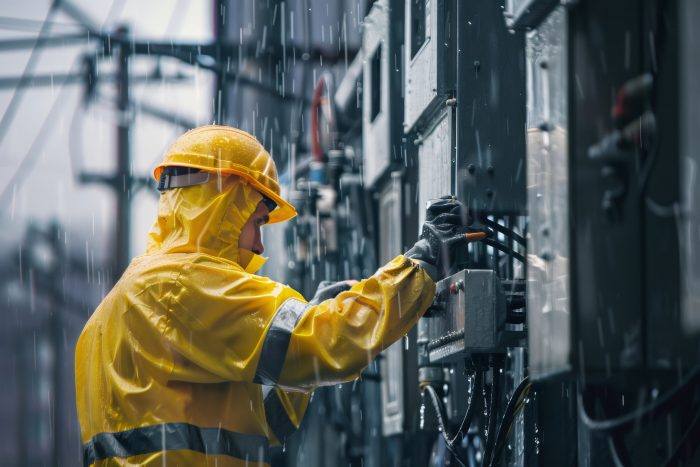
For Sarah, uncertainty is not a theoretical inconvenience, it is the single largest threat to financial credibility. Every investment case she prepares must withstand scrutiny from regulators, auditors, and stakeholders. Yet her financial models frequently sit atop shifting sands: incomplete asset records, divergence between operational data and strategic forecasts, and risk factors that remain unquantified.
Without clarity on long-term cost trajectories or the impact of external pressures, she is often forced into conservative financial strategies that prioritise short-term affordability over long-term resilience. The result is a portfolio of investments that may appear defensible on paper but may not truly address the system’s most pressing vulnerabilities.

Although Elizabeth, David, and Sarah view the organisation from different vantage points, they share a common frustration: the sector’s inability to integrate risk, strategy, and investment into a unified, future-facing picture. Legacy systems and traditional asset management frameworks cannot keep pace with accelerating climate volatility, regulatory expectations, and the complex interdependence of water networks.
The sector is effectively trying to navigate a rapidly changing world using tools designed for a bygone era. This capability gap between what leaders need to know and what their systems can reveal lies at the heart of the modernisation challenge.
There is a moment that happens in every water utility: the moment when leaders realise that the future they must plan for no longer resembles the past they once understood. Climate turbulence, aging networks, rising expectations, and regulatory pressure have pulled the sector into a new era, yet its tools and processes remain anchored in old ways of thinking. This is the industry’s great paradox: water has never mattered more, yet the systems used to protect it have never felt more fragile.
AI Simulation breaks that paradox. Not by automating spreadsheets, or by adding another dashboard to the pile, but by introducing an entirely new operating system: one that treats a utility not as a collection of assets, departments, and budgets, but as a dynamic, evolving ecosystem whose future can be explored, tested, and shaped in ways that were previously impossible.
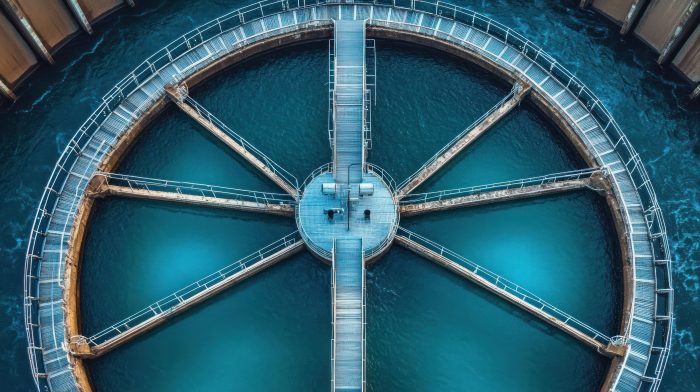
For Elizabeth, AI Simulation introduces a structured, data-driven view of future operating conditions. Instead of extrapolations or narrative summaries, she can access scenario outputs generated from thousands of simulations that incorporate hydraulic behaviour, asset health metrics, climate projections, operational constraints, and performance thresholds. These simulations expose where failure likelihood increases, where operational resilience erodes, and which assets or systems drive the highest regulatory or customer risk.
This allows the board to interrogate risk not only at a corporate level but at a system, asset-class, and intervention level, supported by quantifiable evidence. It becomes possible to evaluate whether the organisation’s stated risk appetite aligns with actual asset behaviour, to validate whether mitigation plans are proportionate, and to anticipate shifts in service exposure before they translate into compliance breaches. AI Simulation elevates governance from retrospective review to anticipatory, evidence-led risk stewardship.
For David, AI Simulation is the breakthrough that finally bridges the gap between long-term strategy and operational constraints. Instead of relying on static deterioration curves or spreadsheet lifecycle models, he can run multi-decade simulations that incorporate hydraulic performance, asset failure probabilities, climate stressors, demand evolution, and intervention impacts in one unified environment.
With engineering-grade granularity, David can quantify how pressure zones behave under stress, how pump stations degrade under varying duty cycles, how pipe cohorts respond to soil moisture or temperature conditions, and how maintenance policies shift long-term risk. He can compare capital, operational, and hybrid interventions on a consistent basis to determine which strategies yield the highest resilience return per pound spent. AI Simulation replaces model stitching with system-wide coherence, enabling a clear line of sight from long-term asset objectives to short-term investment choices.
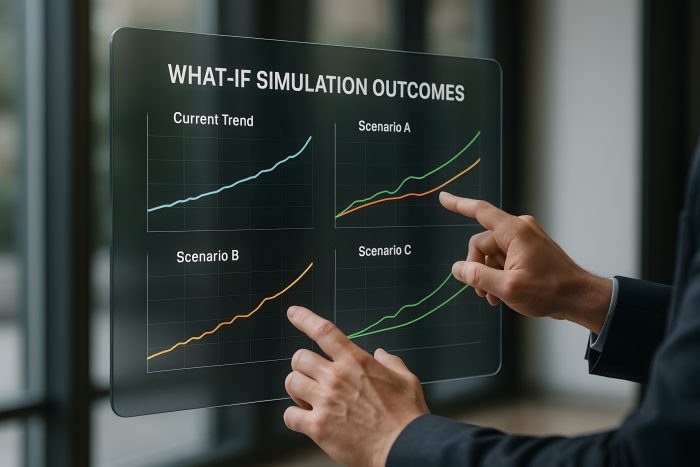
For Sarah, AI Simulation provides the analytical foundation that traditional financial models simply cannot. Instead of relying on point estimates, she gains probabilistic forecasts generated from thousands of computational scenarios. She can evaluate investment proposals using risk-adjusted cost profiles, whole-life cycle assessments, and probability-weighted outcomes.
By examining how project performance shifts across climate scenarios, failure rates, energy price volatility, regulatory changes, and demographic evolution, Sarah gains unprecedented clarity into cost variability, intervention reliability, and timing sensitivity. She can quantify tail risks – the low-frequency, high-impact events that often become multimillion-pound liabilities – and present investment plans with defensible confidence intervals. Simulation upgrades capital planning from educated guesswork to transparent, evidence-based financial governance.

AI Simulation reshapes the entire organisation. For data teams, it clarifies which datasets are critical and which gaps have negligible impact. For operations teams, it functions as an early-warning intelligence layer. For sustainability teams, it integrates environmental and social value directly into scenario evaluations. And for the organisation as a whole, it dissolves silos by providing a shared, simulation-driven view of the future.
In an era defined by storms – literal and organisational – it finally gives water utilities what they have never had before: the ability to shape the future before the future shapes them.


